
How Molten Metal Forming Creates Reliable Die Cast Components


Molten metal forming converts liquid alloy into a defined component by controlling how the metal enters a mold, fills complex features, loses heat, and solidifies. In high-pressure die casting, liquid metal is injected into a reusable steel die under pressure and rapidly solidifies into the required shape.
For buyers, however, good casting quality depends on more than filling a cavity with molten alloy. Part geometry, alloy behavior, gating, venting, die temperature, cooling, and machining requirements all influence the finished component. Understanding these relationships helps explain why two castings with similar external shapes may require very different manufacturing strategies.
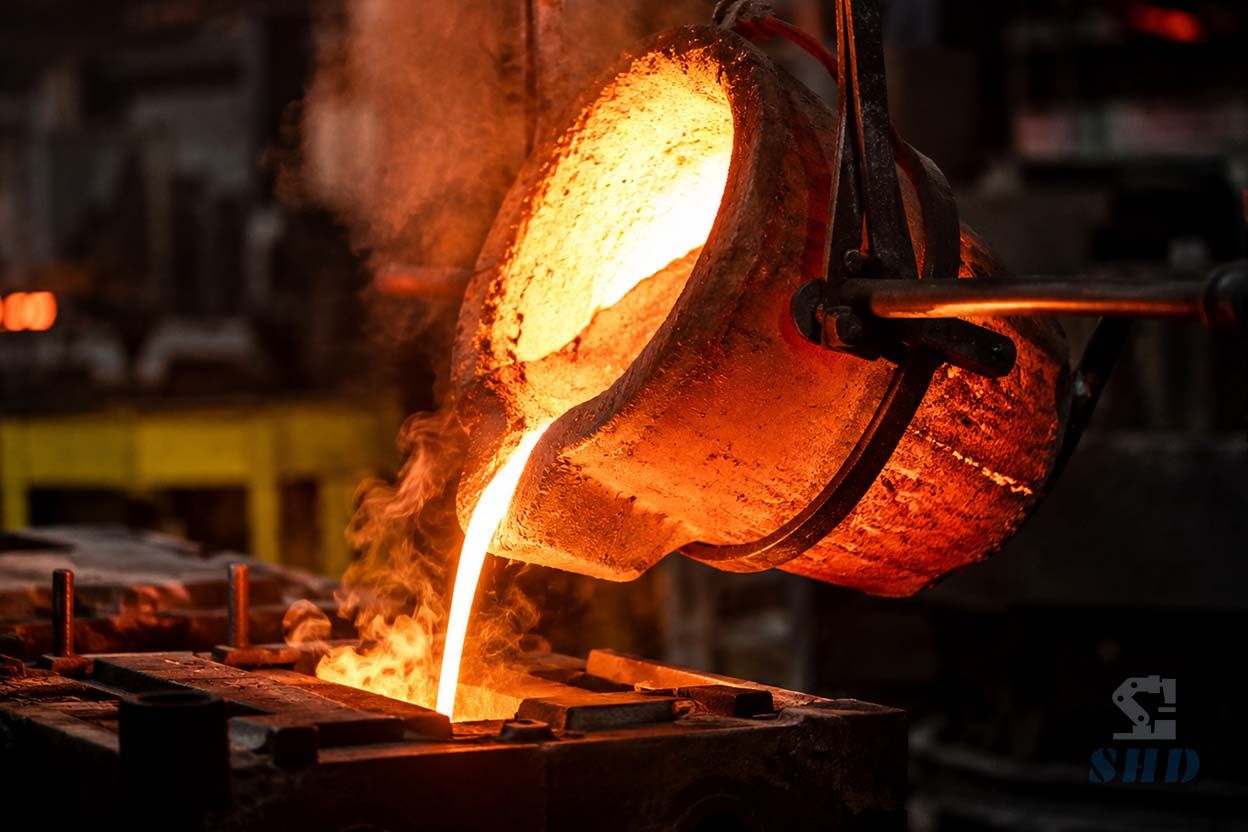
How Molten Metal Forming Is Controlled During Die Casting
During die casting, molten alloy must travel from the injection system through runners and gates before reaching every area of the cavity.
Metal flow needs to be fast enough to fill the part before premature solidification, but the process must also manage air displacement and thermal behavior. If flow becomes unstable or air cannot escape effectively, internal porosity may develop.
Porosity in castings can result from several sources, including solidification shrinkage, dissolved gas, and air trapped during mold filling. Its importance depends on the casting method, alloy, geometry, location, and final application.
This is one reason metal die casting technology relies on coordinated die design and process control rather than injection pressure alone.
Part Geometry Changes Metal Flow
Wall thickness is especially important. A thin section loses heat faster than a thick area. If molten metal must travel through a narrow region before reaching another section, premature cooling may make filling more difficult. Thick areas, meanwhile, can remain hot longer and create different solidification behavior.
Ribs, bosses, deep cavities, sharp transitions, and isolated heavy sections can therefore influence gate placement and thermal balance.
During design review, critical areas should be identified before tooling begins. Small geometry adjustments may sometimes improve filling or simplify tooling without changing the intended function of the component.
Alloy Material Processing Starts Before Injection
Different die-casting alloys do not behave in exactly the same way. NADCA lists aluminum, zinc, magnesium, and copper-based alloys among materials used in die casting, each offering different combinations of casting behavior and material properties.
For alloy material processing, the alloy choice should therefore reflect both the product requirement and the manufacturing route.
Material selection may influence:
-Filling behavior
-Solidification characteristics
-Mechanical requirements
-Part weight
-Surface finishing
-Machining behavior
-Thermal performance
The alloy should not be selected only because it is commonly used. The required geometry and downstream operations also need to be considered.
Solidification Is Part of the Forming Process
Molten metal forming does not end when the cavity is full. As heat leaves the metal, solidification begins and the internal structure develops. NIST notes that casting solidification is influenced by heat transfer, fluid flow, alloy behavior, porosity formation, inclusions, and segregation. This makes die temperature and cooling strategy important.
Areas containing more metal may remain hot for longer, while thinner regions cool quickly. An unbalanced thermal condition can influence dimensions, local solidification behavior, cycle stability, and casting consistency.
Cooling therefore needs to be designed around the geometry of the component rather than applied uniformly across the die.
Machining Requirements Should Be Considered Before Casting
Some die-cast features are produced directly in the mold, while others are better finished through CNC machining. Examples may include precision bores, sealing faces, threaded holes, mounting datums, or dimensions requiring tighter control.
If secondary machining is expected, the casting design needs enough material allowance and suitable locating surfaces. Clamping access should also be considered so the part can be held without unnecessary deformation. Planning casting and machining together can prevent a situation where a part is successfully formed but difficult to finish efficiently.
Quality Control Should Follow the Part's Function
A visually clean casting is not automatically suitable for every application. Some projects may prioritize external dimensions and appearance. Others may be more sensitive to internal porosity, machining exposure, sealing surfaces, or assembly relationships.
NADCA's current die-casting technical standards cover areas including process design, alloys, tooling, tolerances, GD&T, and quality assurance, showing that final quality depends on multiple connected manufacturing factors.
For buyers, the most useful approach is to identify critical dimensions and functional areas before production rather than applying the same requirements to the entire component.
Conclusion
Molten metal forming is a coordinated process involving alloy preparation, mold filling, air management, heat transfer, solidification, and secondary processing.
Reliable die-cast components come from controlling these factors together. Good metal die casting technology therefore begins with understanding the geometry and functional requirements of the part, while effective alloy material processing ensures that material behavior is considered throughout forming and finishing.
Early technical communication between the buyer and manufacturer can reduce unnecessary tooling changes and help establish a more practical production route.
Metal Forming Project Support from SHD Precision Die Casting
SHD Precision Die Casting supports custom die-casting projects based on customer drawings, three-dimensional models, functional surfaces, machining requirements, and production needs.
By reviewing geometry, material considerations, tooling requirements, critical dimensions, and downstream operations before production, SHD Precision Die Casting can help identify manufacturing risks early and develop a more suitable route from die design to finished metal components.
Frequently Asked Questions
Q01: Does a faster metal injection speed always produce a better casting?
No. Injection speed needs to match the alloy, cavity geometry, gate system, venting, and process requirements. Higher speed may help fill thin sections, but poorly controlled flow can also increase air entrapment. The correct setting depends on the specific die and component.
Q02: How should buyers choose an alloy for a die-casting project?
Buyers should begin with the component's mechanical, weight, thermal, surface, machining, and application requirements. The manufacturer can then evaluate whether the selected alloy is also compatible with the geometry and intended casting process. Alloy selection should therefore be a joint material and manufacturability decision.
Q03: Can porosity be completely avoided in molten metal forming?
Not every casting requires zero porosity, and different types of porosity have different effects. Size, location, connectivity, machining depth, and the function of the component all matter. The practical goal is to define acceptable internal quality according to the application rather than use one universal requirement.
Q04: What information should be provided before developing a die-cast part?
Useful project information includes the 3D model, technical drawing, alloy requirement, critical tolerances, annual quantity, machining areas, surface expectations, mating surfaces, and any functional requirements related to leakage, loading, or assembly. These details help the manufacturer review both casting and downstream processing before tooling.