
Magnesium Alloy Castings in Modern Precision Die Casting Manufacturing


Blogpost keywords: magnesium alloy castings, magnesium die casting, lightweight structural components
Magnesium alloy castings are increasingly becoming a critical material solution in modern precision die casting, especially for industries that demand extreme lightweight performance without compromising structural integrity.
At SHD Precision Die Casting, we often see magnesium die casting projects driven by the need for weight reduction, improved energy efficiency, and better system-level performance in automotive, electronics, and high-end industrial applications.
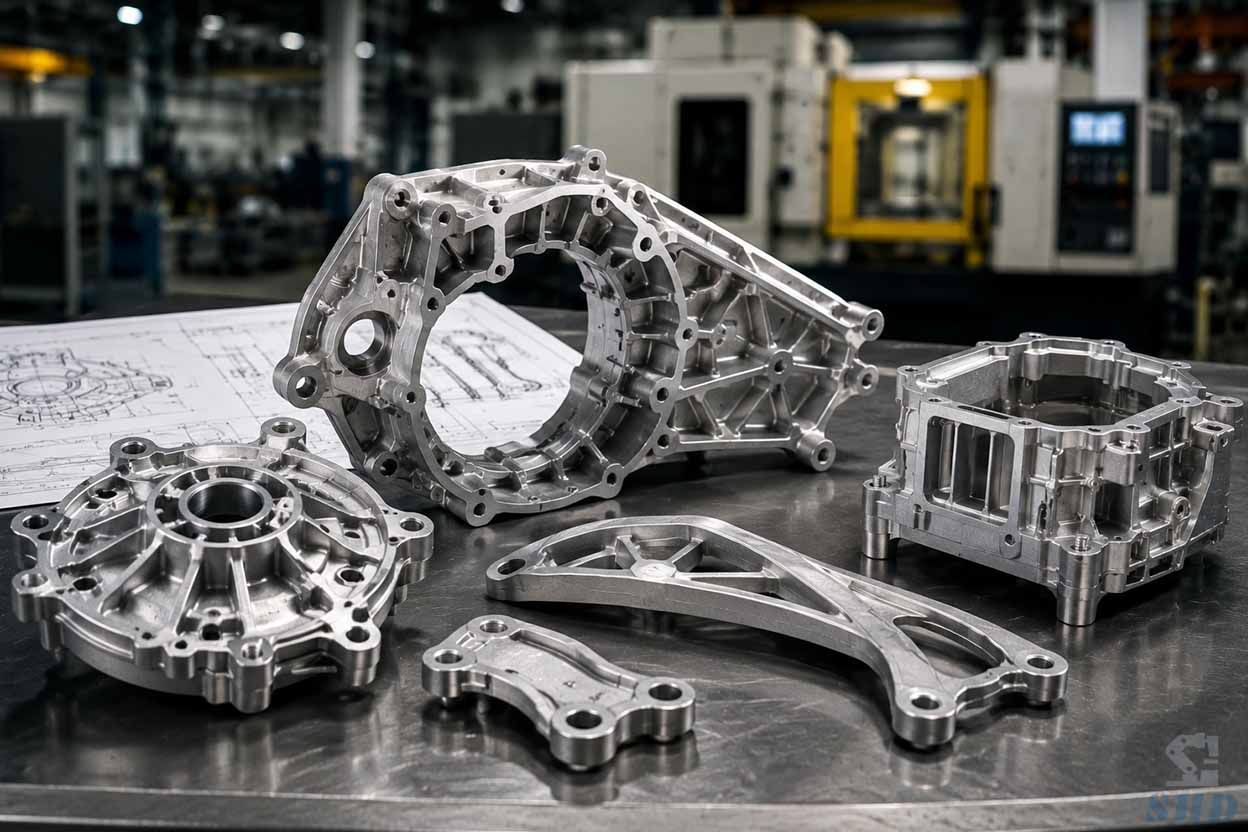
Why Magnesium Alloy Castings Are Gaining Industrial Attention
Among all structural die casting materials, magnesium stands out as one of the lightest engineering metals available for mass production.
This unique advantage makes magnesium alloy castings highly attractive for applications where every gram of weight reduction directly contributes to performance improvements. In automotive systems, for example, reducing component weight can improve acceleration efficiency and reduce overall energy consumption. In electronics and precision equipment, magnesium die casting also helps achieve compact structures without sacrificing rigidity.
However, magnesium is not simply a "lighter aluminum." Its processing behavior, thermal characteristics, and safety requirements make it a highly specialized material in precision die casting.
The Engineering Behavior of Magnesium Die Casting
Magnesium die casting behaves differently compared to aluminum or zinc-based systems. Its lower melting point allows for relatively fast cycle times, but it also requires strict control over oxidation and thermal stability during production. Proper furnace protection and controlled atmosphere handling are often necessary to ensure consistent casting quality.
At SHD Precision Die Casting, magnesium alloy castings are typically used in projects where both weight reduction and structural performance are critical, such as handheld devices, automotive interior components, and aerospace-related lightweight structures.
The mold design stage becomes especially important. Because magnesium flows easily, thin-wall geometries can be achieved, but gating systems must be carefully engineered to avoid turbulence and internal porosity.
Advantages Over Traditional Structural Materials
Compared with traditional aluminum die casting, magnesium die casting offers a further step in weight reduction. This difference may seem small at the material level, but at the system level it becomes significant. For example, replacing aluminum components with magnesium alloy castings in large assemblies can reduce total system weight noticeably.
Another advantage is improved machinability. Magnesium is easier to machine compared to many other metals, which can reduce secondary processing time in precision manufacturing workflows.
In addition, magnesium die casting enables high integration of multiple functional features into a single structural part, reducing assembly complexity in OEM production.
Common Misconceptions in Magnesium Die Casting Projects
One common misunderstanding is assuming magnesium can simply replace aluminum without redesign. In reality, magnesium alloy castings require specific structural considerations, including wall thickness optimization, corrosion protection strategies, and careful surface treatment selection.
Another misconception is related to cost expectations. While magnesium is lightweight, the overall project cost depends heavily on tooling complexity, protective handling requirements, and production scale. For this reason, magnesium die casting is most effective when integrated into well-planned OEM product development cycles rather than late-stage substitutions.
Practical Considerations for OEM Development
For OEM buyers and engineers, early collaboration is essential when working with magnesium alloy castings. Design decisions such as rib placement, wall thickness distribution, and surface finishing requirements all influence both manufacturability and long-term performance.
At SHD Precision Die Casting, we evaluate magnesium die casting projects from both structural and production perspectives to ensure stability in mass production and consistency in dimensional control.
Conclusion
Magnesium alloy castings represent one of the most advanced lightweight solutions in precision die casting, offering exceptional weight reduction potential combined with strong structural integration capability when properly engineered.
Lightweight Manufacturing Support for Advanced OEM Projects
At SHD Precision Die Casting, we support magnesium die casting projects through tooling optimization, process control, and engineering-driven production planning. Our expertise in magnesium alloy castings helps OEM customers achieve lightweight structural components with stable and scalable manufacturing performance.