
Lightweight Die Casting Is Transforming Modern Product Development


Blogpost keywords: lightweight die casting, aluminum component production, weight reduction engineering
Lightweight die casting has become a major focus across manufacturing industries as companies seek to improve performance, reduce energy consumption, and optimize production efficiency.
From electric vehicles and industrial automation equipment to consumer electronics and aerospace systems, manufacturers are increasingly evaluating how component weight affects both product performance and operating costs. As a result, lightweight die casting is no longer viewed as a niche engineering approach but as a strategic manufacturing solution.
Why Lightweight Die Casting Is Gaining Market Momentum
Several market trends are driving the adoption of lightweight die casting. The rapid growth of electric mobility has increased demand for lighter structural components that can help maximize battery efficiency. At the same time, industrial equipment manufacturers are seeking ways to reduce transportation costs and improve assembly efficiency through optimized component design.
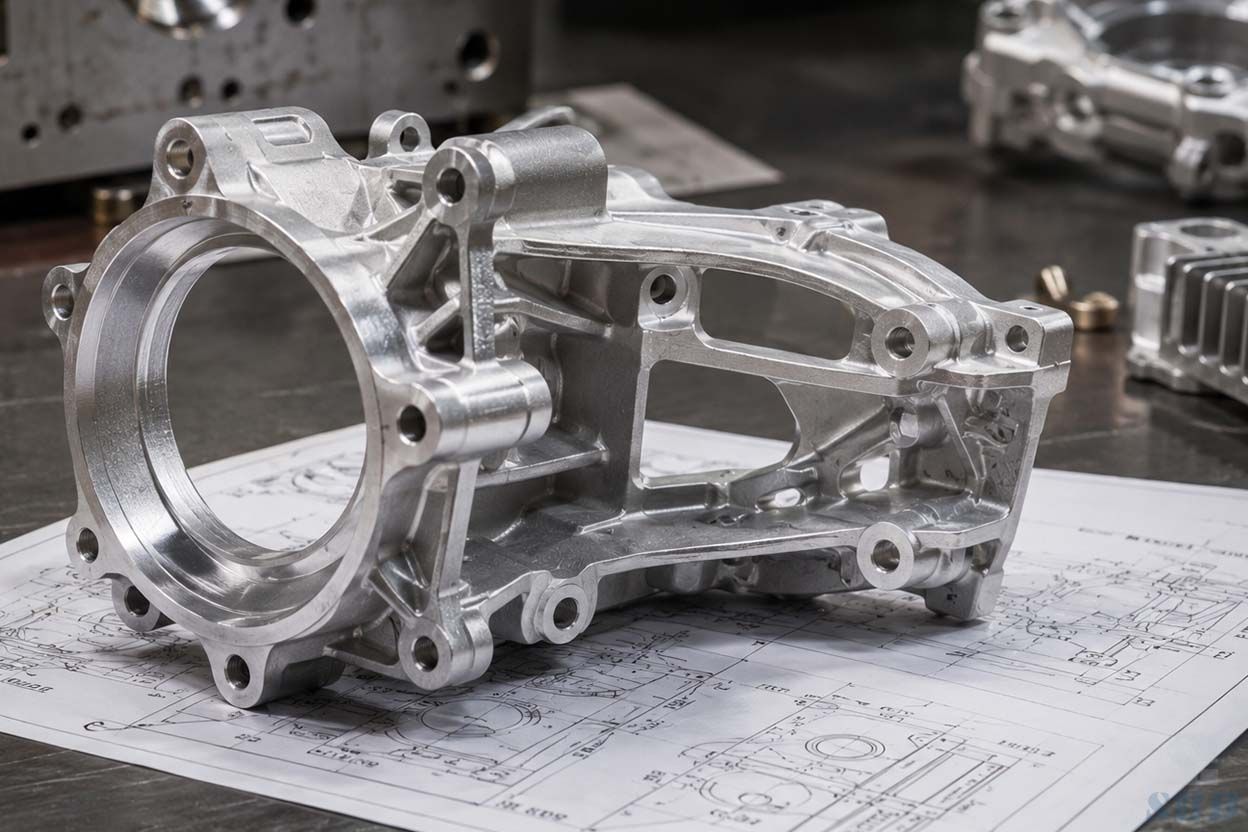
At SHD Precision Die Casting, we have seen growing interest in aluminum component production from customers who previously relied on steel fabrication or machined assemblies. By redesigning products around lightweight casting principles, many OEMs can reduce part count while maintaining structural performance.
This shift is not only about material substitution. It is also about rethinking how components are engineered and manufactured.
Common Applications of Lightweight Die Casting
Today, lightweight die casting can be found across a wide range of industries. In automotive applications, it is commonly used for motor housings, transmission cases, battery enclosures, brackets, and structural support components. Weight reduction engineering helps improve vehicle efficiency while maintaining safety requirements.
Industrial machinery manufacturers use aluminum component production for pump housings, control system enclosures, robotic structures, and automation equipment where reduced weight can simplify installation and maintenance.
Consumer products also benefit from lightweight die casting. Products such as power tools, electronic housings, lighting systems, and premium hardware often require a balance between strength, appearance, and manageable weight.
As manufacturing technologies continue to advance, the range of suitable applications continues to expand.
Advantages Compared with Traditional Casting Approaches
One of the most significant advantages of lightweight die casting is the ability to achieve complex geometries without excessive material usage. Traditional casting methods often require thicker wall sections to ensure reliable filling and structural integrity. Modern die casting technology allows engineers to create thinner walls, optimized rib structures, and integrated reinforcement features that contribute to effective weight reduction engineering.
Another advantage is production efficiency. Many conventional manufacturing routes involve multiple fabrication and machining steps. In contrast, aluminum component production through die casting can integrate several functions into a single component, reducing assembly complexity and improving consistency.
Lightweight die casting also supports higher production volumes with repeatable quality. This makes it particularly attractive for OEM manufacturers seeking long-term scalability.
Practical Considerations for OEM Projects
While the benefits are substantial, successful lightweight die casting requires careful engineering evaluation. Aggressive weight reduction can sometimes create challenges related to metal flow, thermal stress, or structural durability. Components must be designed to balance weight savings with manufacturing stability.
At SHD Precision Die Casting, lightweight projects are typically reviewed using both structural analysis and manufacturability assessments before tooling development begins. This helps ensure that production efficiency and product performance remain aligned.
The most successful designs are often those that integrate weight reduction engineering from the earliest stages of product development.
Conclusion
Lightweight die casting is reshaping modern manufacturing by enabling efficient aluminum component production and advanced weight reduction engineering across a growing range of industrial applications.
Building Lighter and Smarter OEM Components
At SHD Precision Die Casting, we help customers develop lightweight die casting solutions that combine structural performance, manufacturing efficiency, and scalable production. Through optimized aluminum component production and practical weight reduction engineering, we support OEM projects from concept development to mass production.