
What Defines High-Performance Metal Die Casting?


High-performance metal die casting is not defined by production speed alone. It means producing a component whose geometry, dimensional stability, surface condition, and functional areas remain consistent with its intended application. Achieving this requires coordination between part design, mold design, metal flow, temperature control, and inspection rather than relying on one production parameter.
Die casting uses high pressure to inject molten metal into a reusable steel die, allowing complex shapes to be produced repeatedly. The process itself is efficient, but when a part has demanding functional requirements, small design or process decisions can have a significant effect on the final result.
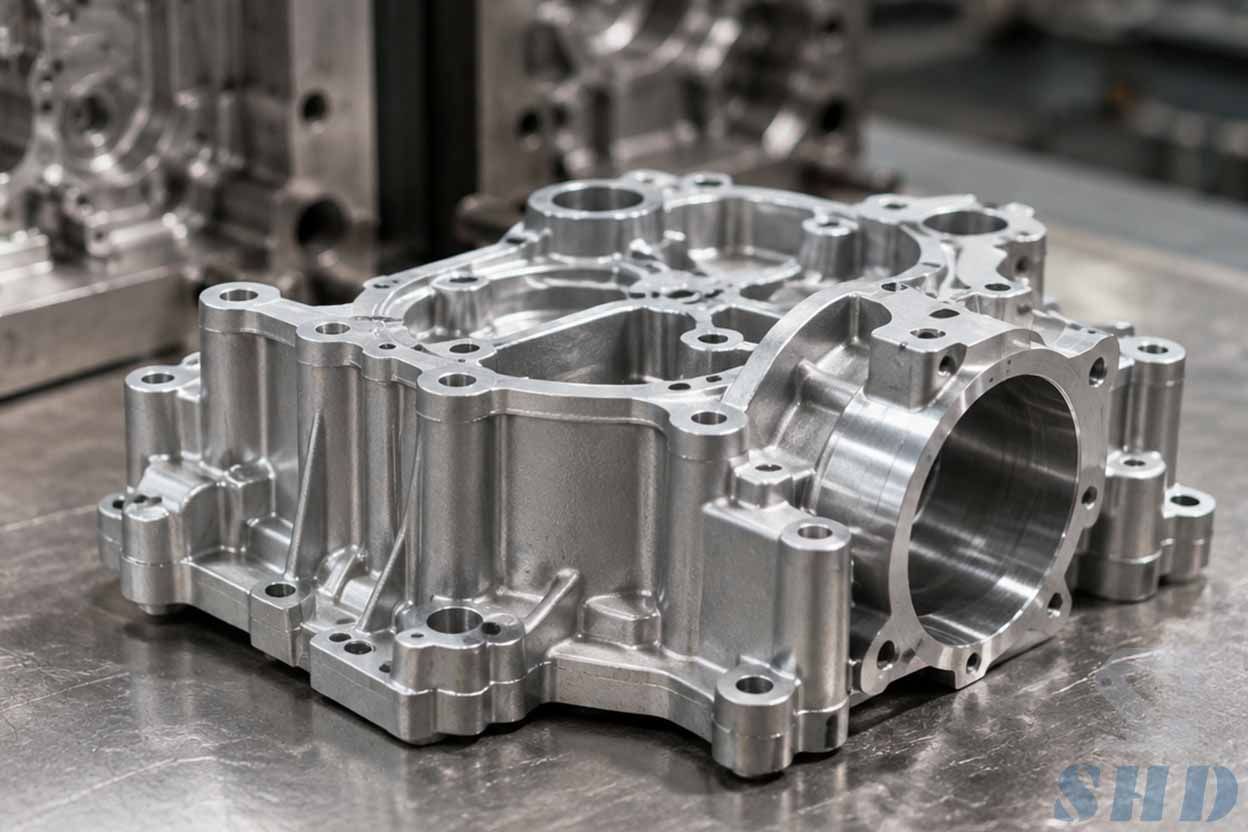
How High-Performance Metal Die Casting Is Controlled
From a manufacturing perspective, performance starts before molten metal reaches the die. When we review a new component, the drawing often reveals potential production risks long before tooling begins.
Wall thickness transitions are one example. A sudden change between thick and thin sections can create different filling and solidification conditions within the same casting. Deep ribs, isolated bosses, sharp transitions, and difficult-to-fill areas may also require additional attention during mold and gating design.
For this reason, precision die casting begins with understanding which features actually matter to the finished product. Mounting surfaces, sealing areas, holes, mating locations, and dimensions related to assembly may require different levels of control from purely cosmetic areas.
Metal Flow Affects More Than Part Appearance
Molten metal must enter and fill the cavity in a controlled way. Gate location, flow path, overflow areas, and venting all influence how air leaves the cavity and how the casting solidifies.
Porosity is therefore not simply a material problem. NADCA identifies trapped air, steam, and lubricant among the possible sources of gas porosity in die casting. If internal quality is important to the application, these factors need to be considered together with the part geometry.
This is also why a casting that looks good externally cannot automatically be assumed to have the required internal condition. The quality requirements should be defined according to how the component will actually be used.
Mold Temperature and Cooling Need Balance
A die repeatedly experiences heating from molten metal and cooling between production cycles. Maintaining suitable thermal conditions helps the metal fill the cavity and solidify more consistently.
Cooling is not simply a matter of making the die colder. Different areas of a component may contain different amounts of metal and therefore lose heat at different rates. Local hot areas can affect solidification, dimensional stability, and production consistency.
Die design and cooling strategy are consequently part of die casting quality control. NADCA's technical resources treat die temperature control, cooling-line placement, porosity management, and process capability as important areas of die-casting engineering.
Secondary Operations Should Be Considered Early
A die-cast component is not always complete when it leaves the mold. Depending on the drawing, some areas may require trimming, CNC machining, surface finishing, or additional inspection.
These operations should be considered during the initial design review. If a bore will later be machined, for example, the casting must provide suitable material allowance and a practical way to locate and hold the part. The same principle applies to sealing surfaces, threaded features, or other precision areas.
Planning these details early can reduce unnecessary corrections after tooling has already been produced.
Performance Depends on the Requirement
One common mistake is describing a casting simply as "high strength" or "high precision" without defining what those terms mean for the actual component.
A buyer may instead need to clarify:
-Which dimensions affect assembly
-Which surfaces require machining
-Whether internal quality is functionally important
-Where loads are applied
-Which areas are cosmetic
-What downstream finishing is required
-How consistently the part must perform across production batches
The answers help determine where manufacturing control should be concentrated.
Conclusion
High-performance metal die casting comes from controlling the entire manufacturing relationship between part geometry, mold design, metal flow, thermal behavior, secondary processing, and inspection.
For buyers, providing clear drawings and identifying critical functional areas early can be just as important as choosing the casting process itself. A realistic manufacturing plan focuses tighter control where the component needs it instead of treating every feature in the same way.
Manufacturing Considerations with SHD Precision Die Casting
At SHD Precision Die Casting, project discussions begin with understanding the part rather than applying the same manufacturing approach to every drawing. By reviewing geometry, functional surfaces, machining areas, production requirements, and potential manufacturing risks before tooling, the team can develop a more practical route toward consistent die-cast components. This early communication also gives customers a clearer understanding of which design details may affect tooling, production, and final part quality.