
Exquisite Die-Cast Parts in Premium OEM Product Development


Blogpost keywords: exquisite die-cast parts, precision metal casting, decorative surface finishing
Exquisite die-cast parts occupy a unique position within modern manufacturing because they must satisfy both engineering performance and visual presentation requirements at the same time.
Unlike purely structural components that are hidden inside equipment, these parts often remain visible to end users. As a result, manufacturers must balance dimensional accuracy, surface quality, material consistency, and aesthetic refinement throughout the production process.
Why Exquisite Die-Cast Parts Require More Than Standard Production Control
Many people assume that die casting is simply a method for producing metal components efficiently. While this is true for many industrial applications, exquisite die-cast parts demand a much higher level of process control. At SHD Precision Die Casting, projects involving luxury hardware, decorative lighting, premium furniture fittings, and consumer products often require tighter standards than conventional industrial castings.
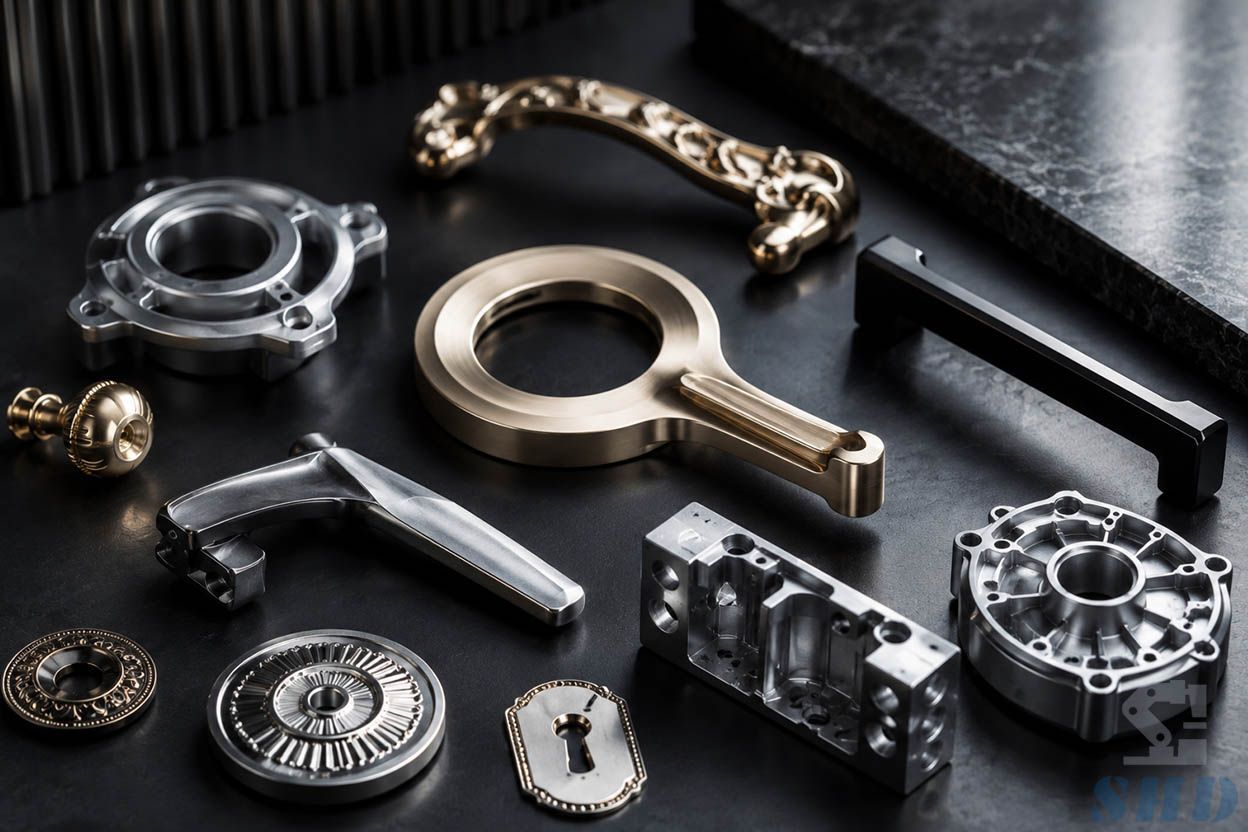
A successful precision metal casting project is not judged solely by dimensional inspection reports. Surface uniformity, edge definition, texture consistency, and finishing compatibility are equally important.
Even minor imperfections that would be acceptable on internal mechanical parts can become unacceptable when the component serves as a visible design feature.
The Relationship Between Precision Metal Casting and Surface Quality
The foundation of high-quality decorative components begins long before any finishing operation takes place. Precision metal casting directly influences how well a part responds to polishing, plating, painting, powder coating, or other decorative surface finishing processes.
For example, porosity hidden beneath the casting surface may remain invisible immediately after production. However, once electroplating or mirror polishing begins, those imperfections can become highly visible.
We often advise OEM customers to evaluate appearance requirements during the early tooling stage rather than after production starts. Small adjustments to gating systems, venting design, and cooling balance can significantly improve the final visual outcome. This approach reduces rework while increasing consistency across large production volumes.
Common Misconceptions About Decorative Cast Components
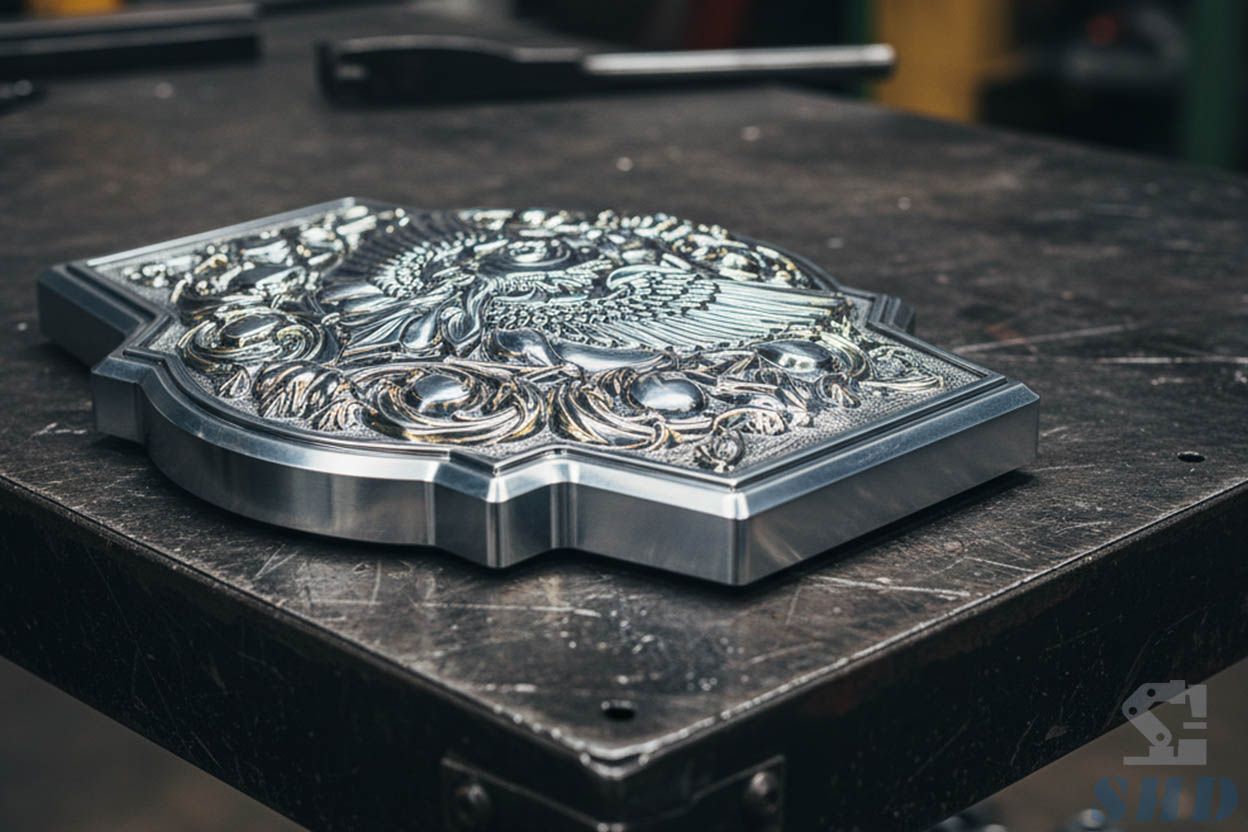
One common misunderstanding is that decorative surface finishing can completely hide casting defects. In reality, most finishing processes enhance the appearance of the underlying substrate rather than conceal major imperfections. High-gloss plating, for example, often makes small defects more noticeable rather than less visible.
Another misconception is assuming that exquisite die-cast parts are only relevant to luxury products. Today, premium appearance standards are increasingly common in consumer electronics, architectural hardware, automotive interiors, and commercial equipment. Buyers often associate visual quality with overall product quality, even when evaluating technical products.
Practical Design Considerations for OEM Projects
When developing exquisite die-cast parts, designers should consider manufacturing requirements alongside visual objectives. Sharp corners, deep recesses, and highly textured surfaces may create challenges during mold filling or finishing operations. Likewise, certain decorative surface finishing techniques require specific draft angles or surface preparation standards.
At SHD Precision Die Casting, we typically review both functional and aesthetic requirements before tooling development begins. This helps ensure that precision metal casting performance supports the intended visual appearance throughout production.
The result is a component that not only performs reliably but also contributes positively to the overall product experience.
Conclusion
Exquisite die-cast parts represent the combination of engineering precision and visual refinement, where precision metal casting and decorative surface finishing work together to create products with lasting value.
Bringing Premium Designs Into Production
At SHD Precision Die Casting, we support exquisite die-cast parts development through tooling optimization, process control, and finishing-oriented engineering. Whether the goal is decorative hardware, architectural components, or premium consumer products, our team helps transform design concepts into manufacturable solutions with consistent quality.