
What Is the Environmental Impact of China Die Casting?


The environmental impact of China die casting comes mainly from the same process factors found in die casting elsewhere: metal melting, machine operation, cooling, lubricants, material consumption, scrap generation, and downstream finishing.
These activities require energy and may generate wastewater or other process residues that need appropriate management. At the same time, aluminum die casting offers opportunities for material recycling, lightweight part design, and efficient near-net-shape manufacturing.
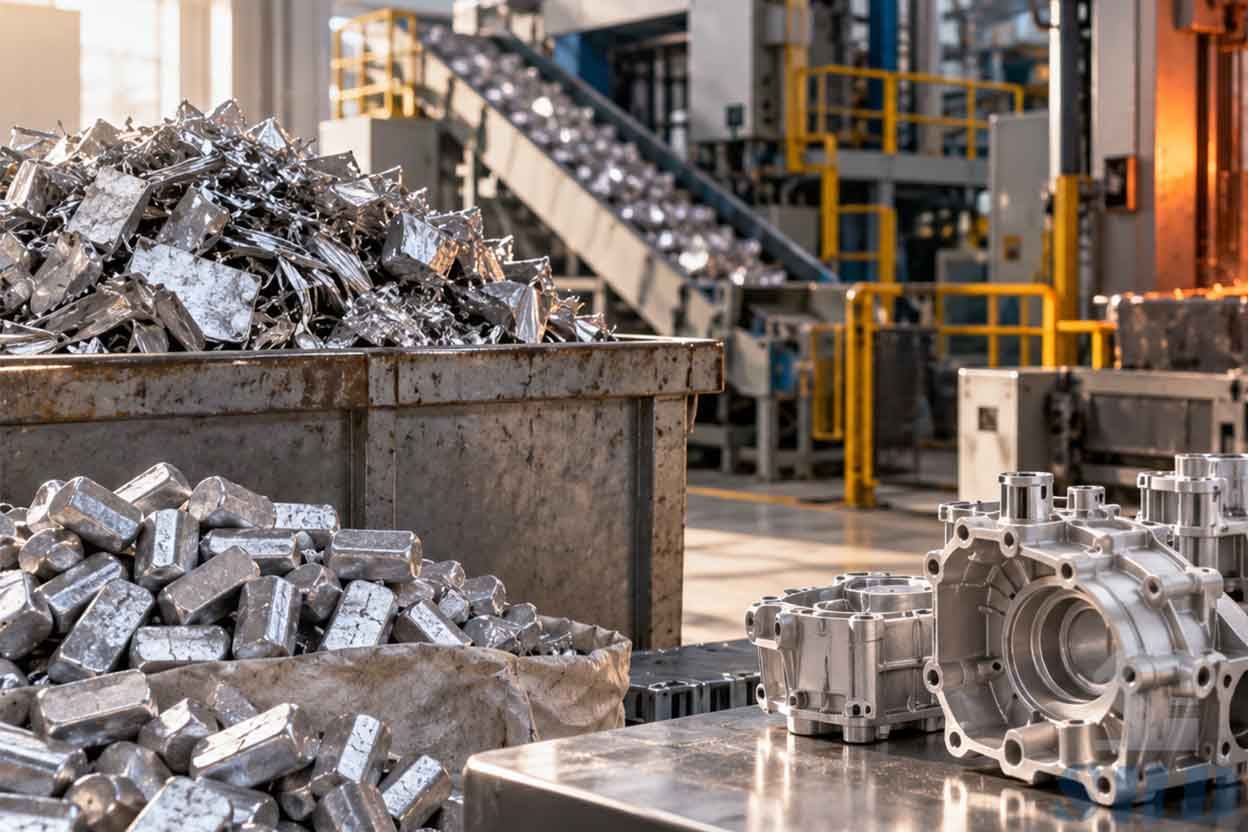
For die-casting manufacturers in China, relevant environmental factors can therefore include recycled material content, energy sources, melting efficiency, process stability, scrap recovery, and waste management. The actual environmental performance of an individual factory should be evaluated from its own production practices rather than assumed from industry-wide claims.
How Can the Environmental Impact of China Die Casting Be Reduced?
One important factor is the use of recycled aluminum. The Aluminum Association states that producing recycled aluminum requires around 5% of the energy needed to produce new primary aluminum. Aluminum can also be recycled repeatedly when material streams are appropriately managed. This gives recycled aluminum die casting an important potential advantage in reducing upstream energy demand.
However, the percentage of recycled aluminum used by Chinese die-casting companies varies according to alloy specifications, suppliers, product requirements, and individual factory practices. A general recycled-content percentage for China's die-casting industry should therefore not be assumed without reliable industry data.
What Can North American Data Tell Us?
NADCA reports that more than 95% of aluminum die castings produced in North America are made from post-consumer recycled aluminum. NADCA also notes that recycled aluminum alloy requires approximately 5% as much energy to produce as primary aluminum.
This is useful evidence of how recycled material can be incorporated into an established die-casting supply chain.
It is not, however, evidence that more than 95% of aluminum die castings produced in China use the same material source. China-specific recycled-content claims should be supported separately before publication.
Melting and Process Stability Affect Energy Use
Melting metal and operating die-casting machinery require significant energy. NADCA specifically identifies metal melting and machine operation as major environmental considerations for die casting.
From a manufacturing perspective, avoiding unnecessary remelting and rejected castings can also prevent additional processing of material that does not become a finished component.
Rather than describing a plant as "green" based on the casting process alone, buyers can ask more specific questions about material sourcing, production stability, furnace management, and scrap handling.
Wastewater Requires Appropriate Management
Wastewater is another process consideration. EPA documentation on metal casting identifies spent die lubricants, hydraulic fluids, coolants, mold cooling leakage, and some finishing operations as possible sources of wastewater in die-casting facilities.
These sources describe the technical characteristics of die-casting operations rather than the current environmental performance of Chinese factories.
Actual wastewater generation and treatment depend on the equipment, lubricant system, cooling method, finishing processes, and environmental management practices of the individual facility.
Lightweight Die Castings Can Reduce Material Use
Die casting can create thin walls, ribs, bosses, and multiple functional features within a single component. NADCA notes that thin-wall, lightweight die-cast components can contribute to lower fuel consumption in cars and trucks.
The wider environmental benefit still depends on the complete product lifecycle. A lighter part should not automatically be described as environmentally superior without considering material source, manufacturing energy, product use, transportation, and end-of-life recycling.
Conclusion
The environmental impact of China die casting cannot be summarized simply as either high or low. Die casting requires energy and appropriate management of process materials and wastewater, while aluminum recycling, scrap recovery, efficient part design, and stable manufacturing can provide opportunities to reduce resource consumption.
For buyers, the more useful approach is to examine measurable factory practices rather than rely on broad sustainability claims about a country or manufacturing process.
Environmental Considerations with SHD Precision Die Casting
SHD Precision Die Casting supports custom die-casting project discussions based on part geometry, material requirements, machining needs, and expected production conditions.
When environmental considerations are important to a sourcing project, buyers can also discuss alloy sourcing, material utilization, scrap handling, part lightweighting, and downstream processing requirements as part of the manufacturing review.