
Die Casting Simulation: What to Verify Before Approving a Mold


Die casting simulation helps engineers predict how molten metal fills a mold, transfers heat, and solidifies before production tooling is finalized. It can reveal potential filling problems, air entrapment, thermal imbalance, and areas where casting defects may develop.
However, simulation results are predictions rather than production guarantees. For buyers approving a new die, the important question is whether the simulated conditions reflect the intended manufacturing process and whether trial castings support the predicted results.
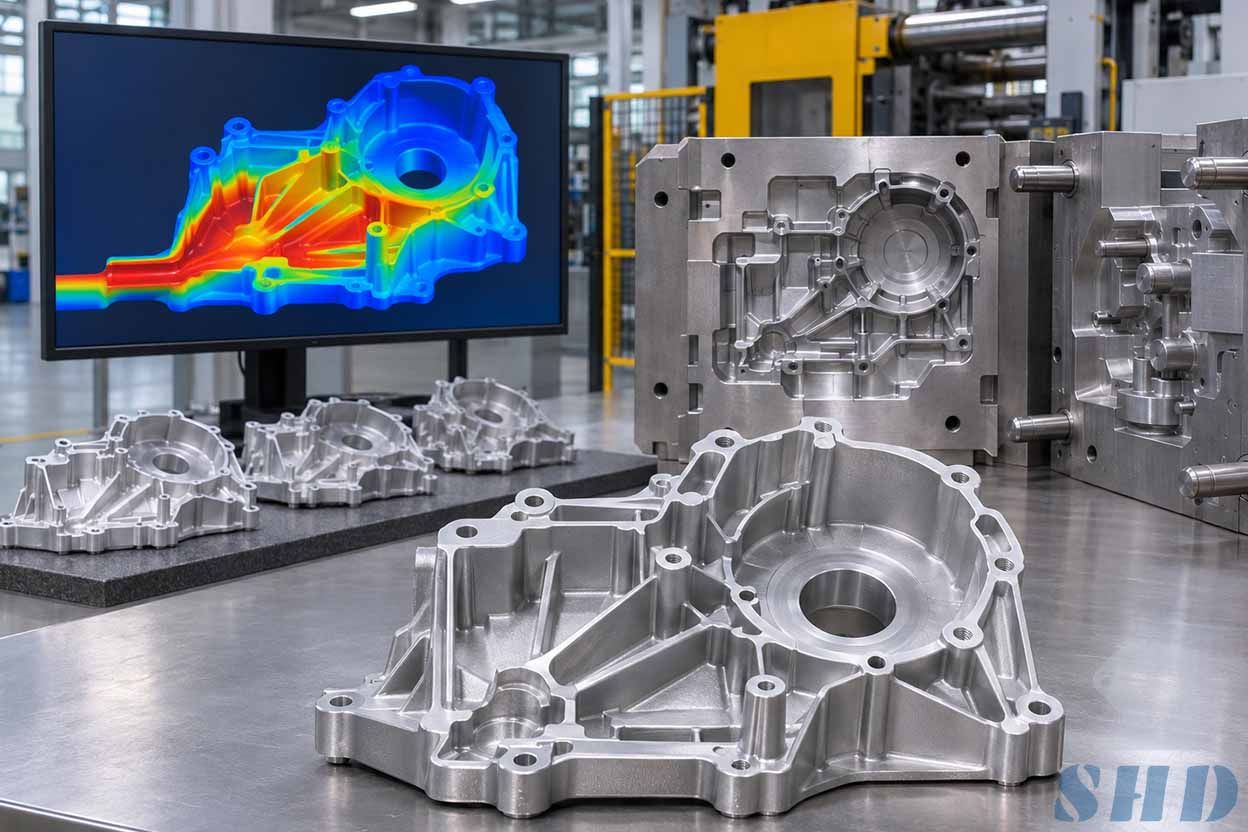
How Die Casting Simulation Supports Mold Approval
Before running a simulation, engineers need accurate input information. This includes part geometry, alloy properties, pouring temperature, die temperature, injection parameters, gating layout, venting conditions, and cooling arrangements.
In high pressure die casting simulation, incorrect assumptions about these conditions can produce results that look convincing but do not represent the actual production environment.
Mold Flow Analysis Identifies Filling Risks
Die casting mold flow analysis helps visualize how molten metal travels through runners, gates, and the casting cavity. Engineers can examine filling sequences, flow-front behavior, air-entrapment regions, and areas that may experience premature solidification. These predictions can support adjustments to gate positions, venting, overflows, and local geometry before tooling is completed.
Porosity Prediction Needs Physical Evidence
Die casting porosity prediction can identify regions where trapped gas or unfavorable solidification conditions may create internal defects. However, different porosity mechanisms require different modeling assumptions. A filling simulation focused on air entrapment may not fully describe shrinkage porosity or other defect sources.
For critical components, predicted defect locations should be compared with trial casting inspection results rather than accepted as conclusive evidence.
What Should Be Verified During Trial Casting?
The following comparison helps engineering and purchasing teams connect simulation findings with measurable production evidence.
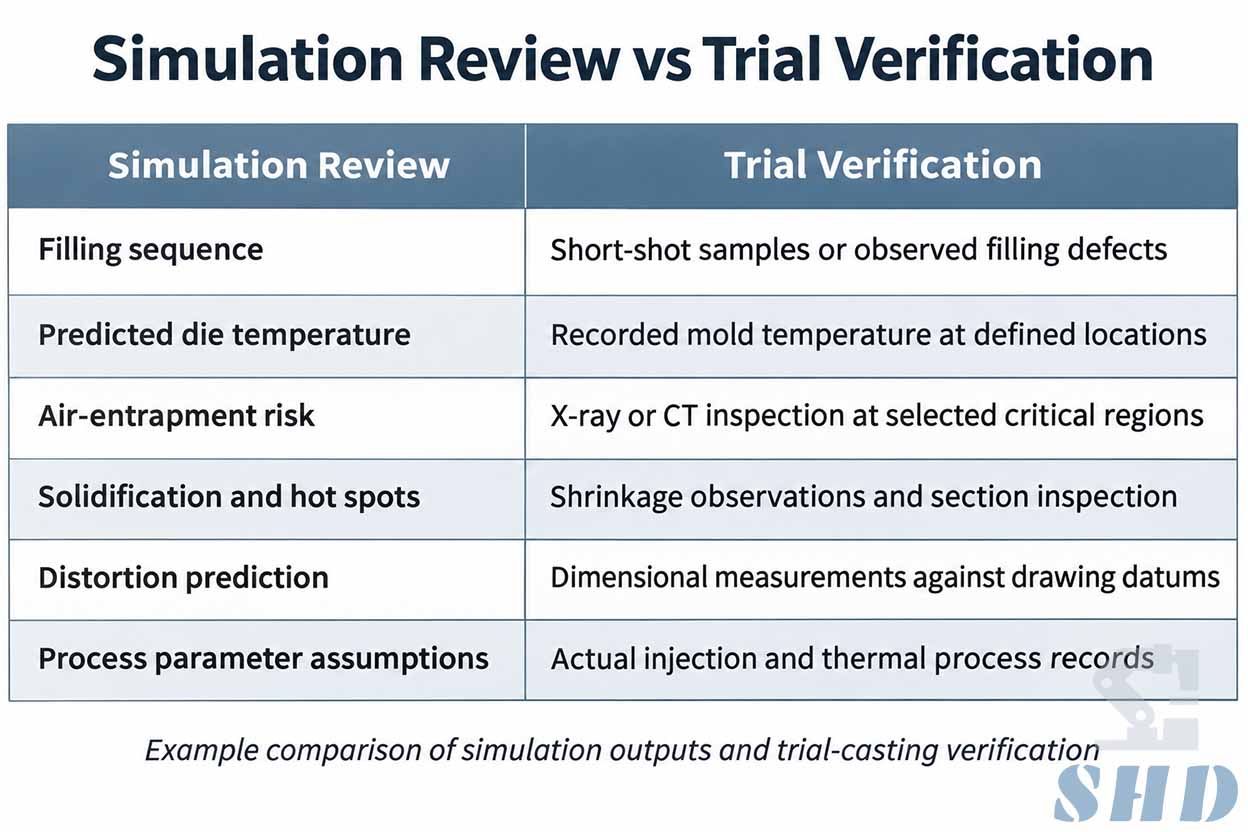
The appropriate inspection method depends on the casting's functional requirements. For CT inspection, scan resolution and sampling locations should be documented so that results can be interpreted consistently.
What If Simulation and Trial Results Disagree?
Die casting simulation validation is an iterative process. If trial samples reveal defects outside the predicted regions, engineers should review whether actual injection conditions, die temperatures, venting, or material assumptions differ from the simulation inputs.
The model may need updating before further tooling modifications are approved. This comparison helps prevent unnecessary changes based on an unverified prediction.
Conclusion
Die casting simulation is valuable because it helps identify potential manufacturing risks before costly tooling decisions are finalized. However, reliable mold approval depends on comparing predicted behavior with actual casting results. Clear input conditions, defined inspection locations, recorded trial parameters, and documented corrective actions make simulation more useful for production planning.
Die Casting Project Planning with SHD Precision Die Casting
SHD Precision Die Casting supports custom die-casting project discussions based on component drawings, material requirements, functional surfaces, and expected production conditions. For new tooling projects, early review of casting geometry, potential defect locations, trial requirements, and quality acceptance criteria can help establish a practical path toward mold approval and repeatable manufacturing.