
Die Casting Rib Design for Lightweight Aluminum Housings


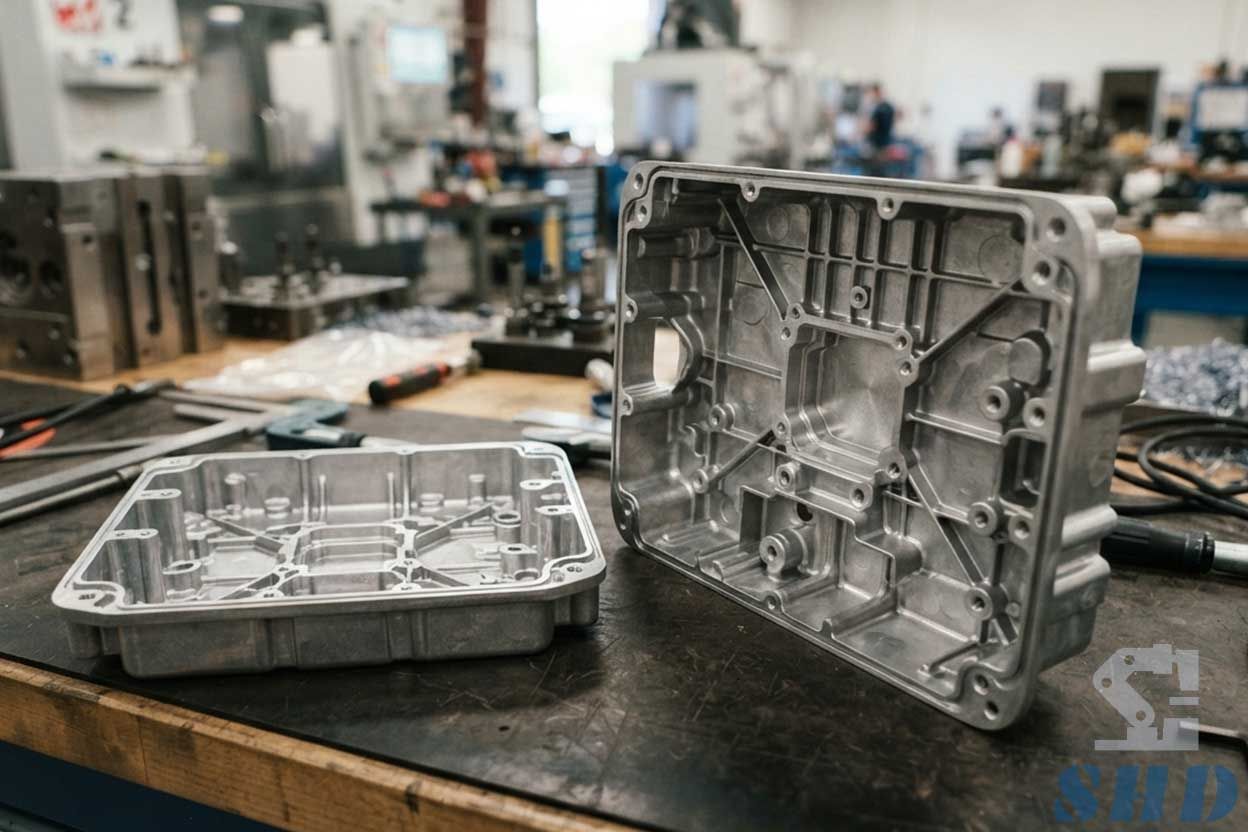
A lightweight aluminum housing needs enough structural strength to support mounting loads, resist deformation, and maintain dimensional stability. Increasing the overall wall thickness might seem like a straightforward solution, but it also adds weight and can create unfavorable casting conditions. This is where die casting rib design becomes important. Properly positioned reinforcing ribs can strengthen selected regions without making the entire housing unnecessarily thick. However, their geometry must be evaluated alongside metal flow, solidification behavior, mold release, and assembly requirements.
For product engineers, the objective is not to add as many ribs as possible, but to place them where they provide practical structural benefits.
How Die Casting Rib Design Balances Stiffness and Manufacturability
Position Ribs According to Structural Requirements
The arrangement of aluminum die casting ribs should reflect how the finished housing is loaded and supported. For example, ribs may help reinforce mounting areas, connect structural walls, or reduce deflection across broad housing panels. Their orientation and connection to surrounding features influence die cast housing stiffness.
Yet additional ribs are not always beneficial. Closely spaced features, deep narrow cavities, and excessive intersections can complicate metal filling and mold construction. A more effective approach is to identify the primary load paths and reinforce the regions where additional stiffness is actually required.
Wall Transitions, Fillets, and Draft Need Attention
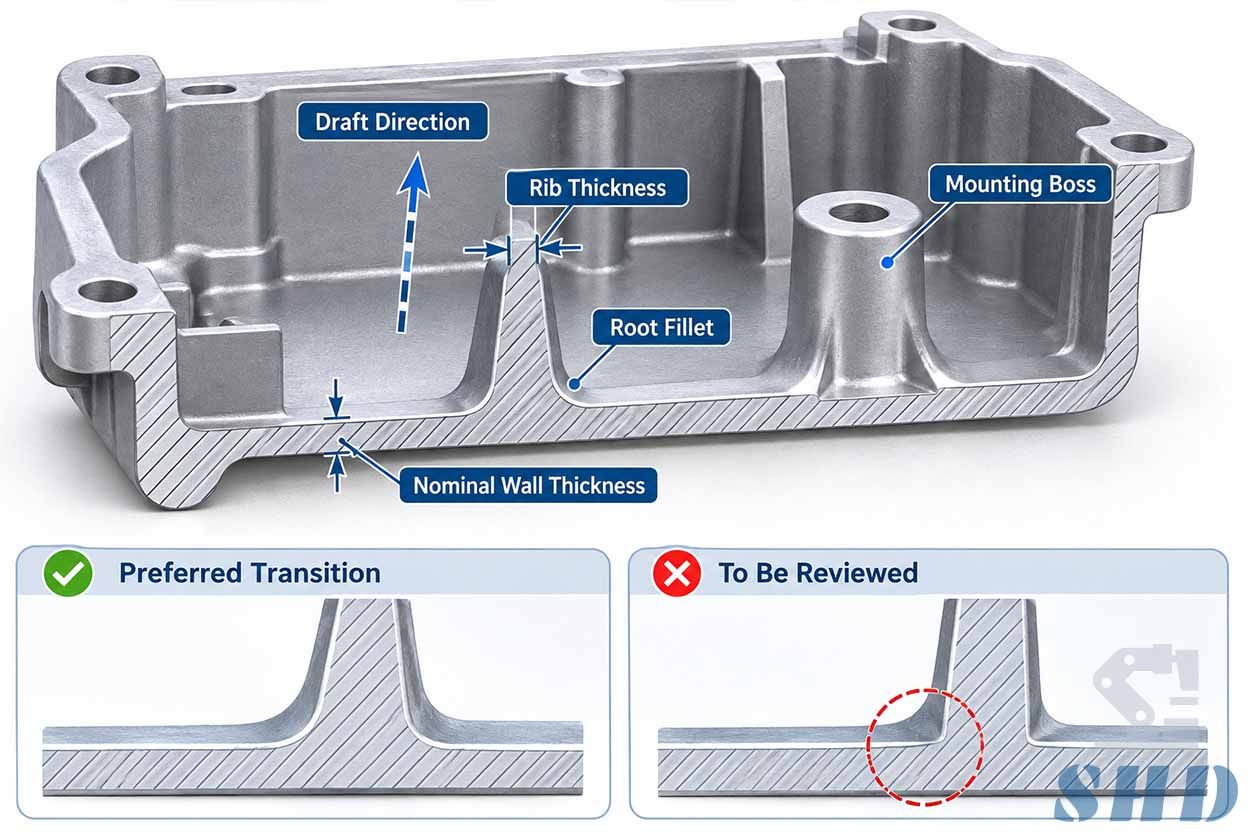
One important consideration is how each rib connects to the surrounding housing. Abrupt die casting wall thickness transitions can create uneven cooling and localized solidification conditions. Generous but appropriately sized root fillets help avoid sharp intersections while supporting metal flow and structural continuity.
Ribs also need sufficient draft for release from the die. Their height, thickness, orientation, and spacing should be reviewed according to the proposed mold-opening direction.
Similar considerations apply to die casting ribs and bosses. A reinforced mounting boss may improve local support, but excessive material accumulation around its base can increase the risk of casting defects.
Research involving ADC12 aluminum alloy housings illustrates why geometry and processing conditions should be considered together. Filling behavior, temperature distribution, and solidification conditions can influence where defects develop.
Consequently, rib dimensions should be evaluated for the particular alloy, part geometry, and manufacturing process rather than selected from a universal ratio.
Review Assembly and Machining Space Before Tooling
A structurally effective rib arrangement may still create problems if it obstructs fasteners, interferes with adjacent components, or limits access to machined surfaces. Before approving the mold, engineers should review the relationship between ribs, mounting holes, sealing flanges, machining allowances, and assembly clearances.
Engineering Review Note: Check whether rib roots create local heavy sections, whether draft follows the intended mold-opening direction, and whether tools can reach all required machining features. Any proposed changes should be assessed against both structural and casting requirements.
Where necessary, structural analysis and casting simulation can support design decisions, followed by verification through trial castings and dimensional inspection.
Conclusion
Effective die casting rib design connects structural performance with realistic manufacturing conditions. By coordinating rib placement, wall thickness, fillets, draft, and assembly accessibility before tooling, engineers can develop lighter aluminum housings without overlooking important casting risks.
Aluminum Housing Development with SHD Precision Die Casting
SHD Precision Die Casting supports custom aluminum housing projects involving die casting, mold development, and secondary machining. Our team reviews customer drawings, material specifications, structural features, and functional requirements to discuss manufacturability before production.
For projects involving die casting rib design, buyers can share their 3D models and technical drawings with SHD to evaluate potential tooling challenges, machining access, and production requirements.