
How Die Casting Machine Tonnage Affects Quotes for Large Aluminum Parts


Die casting machine tonnage can make quotations for the same aluminum component surprisingly different. One supplier may recommend a larger machine with a single-cavity mold, while another proposes a smaller machine or a different cavity arrangement.
For mold buyers and project engineers, the lowest quotation is not necessarily the most economical solution. Understanding the assumptions behind machine selection helps determine whether competing offers are technically comparable.
Why Die Casting Machine Tonnage Matters in Quotation Evaluation
Machine Size Begins with Projected Area and Pressure
A die casting machine must provide enough locking force to keep the mold closed against the pressure generated during metal injection. The required die casting clamping force depends on the effective projected area and the assumed cavity pressure. This area includes the relevant projected surfaces of the casting cavities, runners, gates, and overflows.
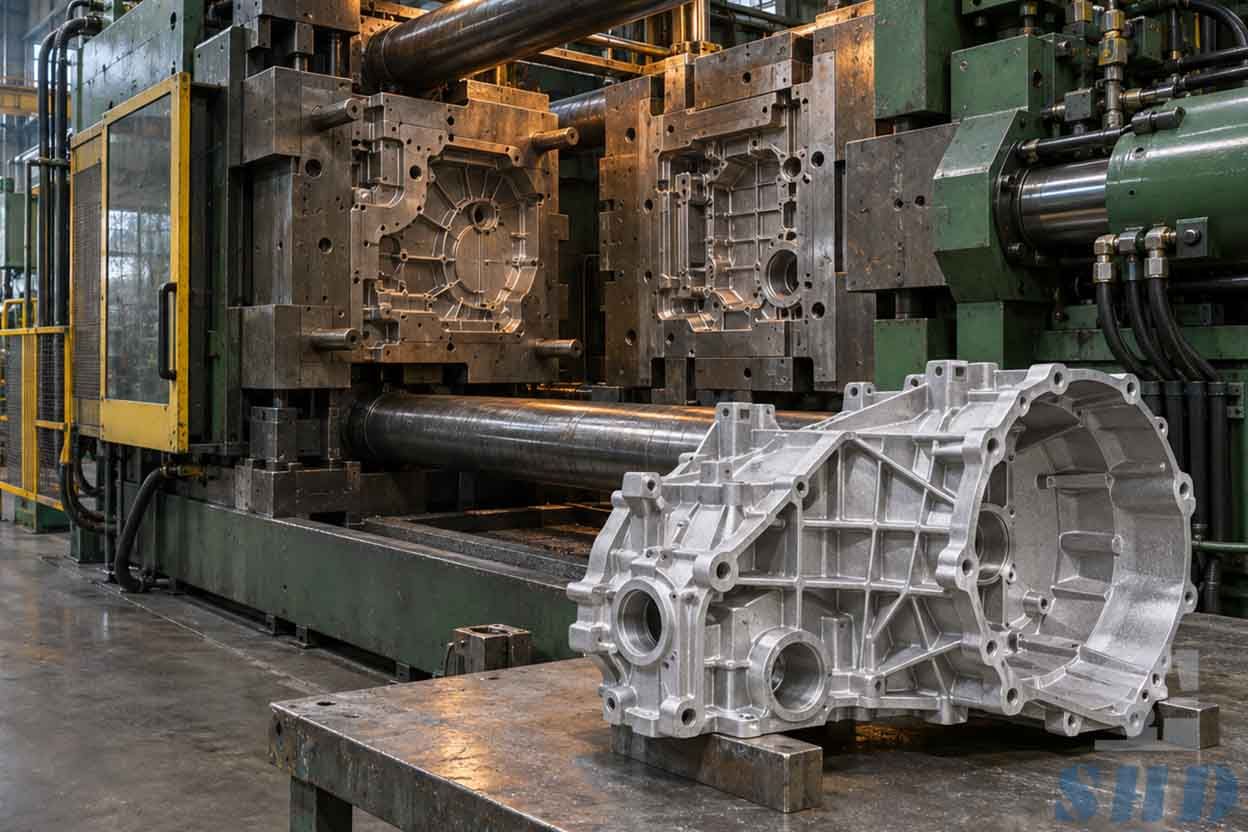
Consequently, two suppliers quoting the same finished component may calculate different requirements if their proposed gating layouts or pressure assumptions differ.
The selected clamping allowance also matters. Buyers should ask suppliers to explain the pressure basis, projected area calculation, and engineering allowance used in machine selection. A machine with a higher tonnage rating is not automatically the better option.
How Cavity Count Changes the Quotation
Mold cavity count introduces another important variable. In multi-cavity die casting, producing several components per cycle may improve output. However, additional cavities increase the total projected area and metal volume, potentially requiring a larger machine and more complicated tooling.
A single-cavity mold may have lower initial tooling complexity but higher unit production costs at certain volumes.
The preferred arrangement depends on expected order quantities, cycle time, mold complexity, production yield, and equipment availability. Buyers should therefore compare quotations using the same annual demand and quality requirements rather than judging machine size independently.
What Should Buyers Verify Before Approving a Quote?
A useful RFQ comparison begins with the proposed mold layout. Suppliers should identify the casting projected area per cavity, additional pressure-relevant projected areas, cavity count, assumed metal pressure, and calculated die-opening force. The quotation should also explain the clamping allowance and proposed machine locking capacity.
Beyond tonnage, buyers need confirmation that the machine can accommodate the mold dimensions, tie-bar spacing, shot volume, and required operating movements. These details reveal whether the proposed equipment is reasonably matched to the actual manufacturing process.
Trial-casting acceptance should be agreed upon before mold approval. Relevant evidence may include dimensional inspection, flash control, surface quality, internal defect acceptance, and pressure-tightness testing where required.
If trial results differ significantly from expectations, the manufacturer should review the original process assumptions and document any necessary adjustments.
Conclusion
Die casting machine tonnage influences tooling arrangements, equipment selection, production costs, and manufacturing feasibility. For large aluminum parts, comparable quotations require consistent projected area calculations, pressure assumptions, cavity arrangements, and trial acceptance criteria.
Clarifying these factors before tooling approval helps buyers identify missing technical evidence and reduce unexpected production costs.
Aluminum Die Casting Project Planning with SHD
SHD Precision Die Casting supports custom aluminum die-casting project discussions based on component drawings, material specifications, functional requirements, and expected production quantities. By reviewing mold configuration, proposed equipment, machining needs, and quality expectations early, SHD helps buyers clarify manufacturing requirements before making tooling decisions.
Frequently Asked Questions
Q01 | Does a Heavier Aluminum Casting Always Require a Higher-Tonnage Machine?
No. Machine tonnage primarily relates to the required locking force, which depends on effective projected area and metal pressure. Casting weight and shot volume affect other aspects of machine selection.
Q02 | Can a Smaller Die Casting Machine Reduce Manufacturing Costs?
Potentially, if the machine provides adequate locking force and meets the required injection and tooling conditions. Selecting undersized equipment can create production risks that outweigh any initial savings.
Q03 | Should Buyers Compare Mold Quotations Using the Same Cavity Count?
Not necessarily. Different cavity arrangements may be valid, but suppliers should explain their proposed production rates, tooling costs, machine requirements, and quality assumptions so buyers can compare total project economics.