
Die Casting Industry Trends 2026 Are Reshaping OEM Manufacturing


Die casting industry trends 2026 show a clear shift from simple metal part production toward lighter, more integrated, and more efficient manufacturing solutions.
For OEM buyers, die casting is no longer only a cost-effective way to make repeatable parts. It is becoming a strategic process for improving product structure, reducing assembly steps, supporting electric vehicle development, and controlling long-term production quality.
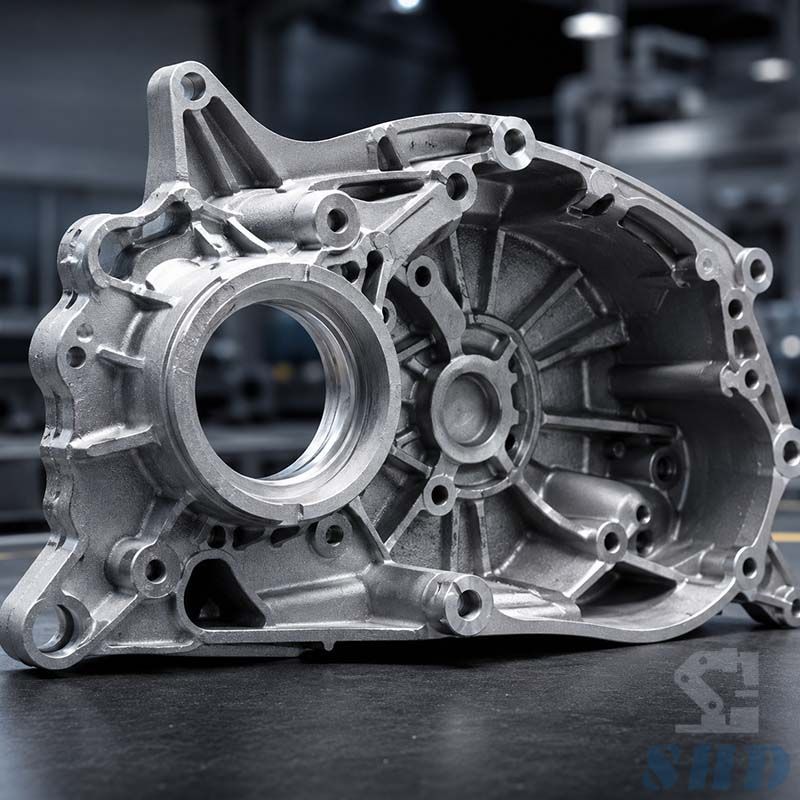
At SHD Precision Die Casting, we see this change directly in customer projects. More inquiries now involve lightweight components, complex housings, integrated brackets, thin-wall structures, and parts that must combine strength, surface quality, and dimensional stability.
Why Die Casting Industry Trends 2026 Matter for OEM Buyers
One of the strongest forces behind die casting industry trends 2026 is the demand for lightweight manufacturing. Automotive, electric vehicle, robotics, power tool, industrial equipment, and electronics brands are all looking for ways to reduce weight without weakening product performance. This makes aluminum die casting especially important because aluminum offers a strong balance between castability, strength, corrosion resistance, and weight reduction.
Compared with traditional fabrication or machining from solid blocks, aluminum die casting can create complex shapes with thinner walls, ribs, bosses, and mounting structures in one production cycle. This gives OEM manufacturers more freedom to integrate multiple functions into a single part.
For example, a housing that previously required machining, welding, and assembly may be redesigned as one die-cast component. This can reduce part count, improve repeatability, and simplify final assembly.
Electric Vehicles Continue to Drive Structural Casting Demand
Electric vehicles remain one of the most important markets influencing die casting development. Battery housings, motor housings, inverter cases, control unit enclosures, chassis parts, brackets, and thermal management components all require reliable metal structures. These applications often need good dimensional control, stable mechanical properties, and efficient production scalability.
Large-format die casting and gigacasting have received significant attention, especially in automotive manufacturing. However, not every OEM project needs extremely large castings. Many practical opportunities still exist in medium-sized aluminum die casting parts, such as structural brackets, electronic housings, cooling plates, and precision enclosures.
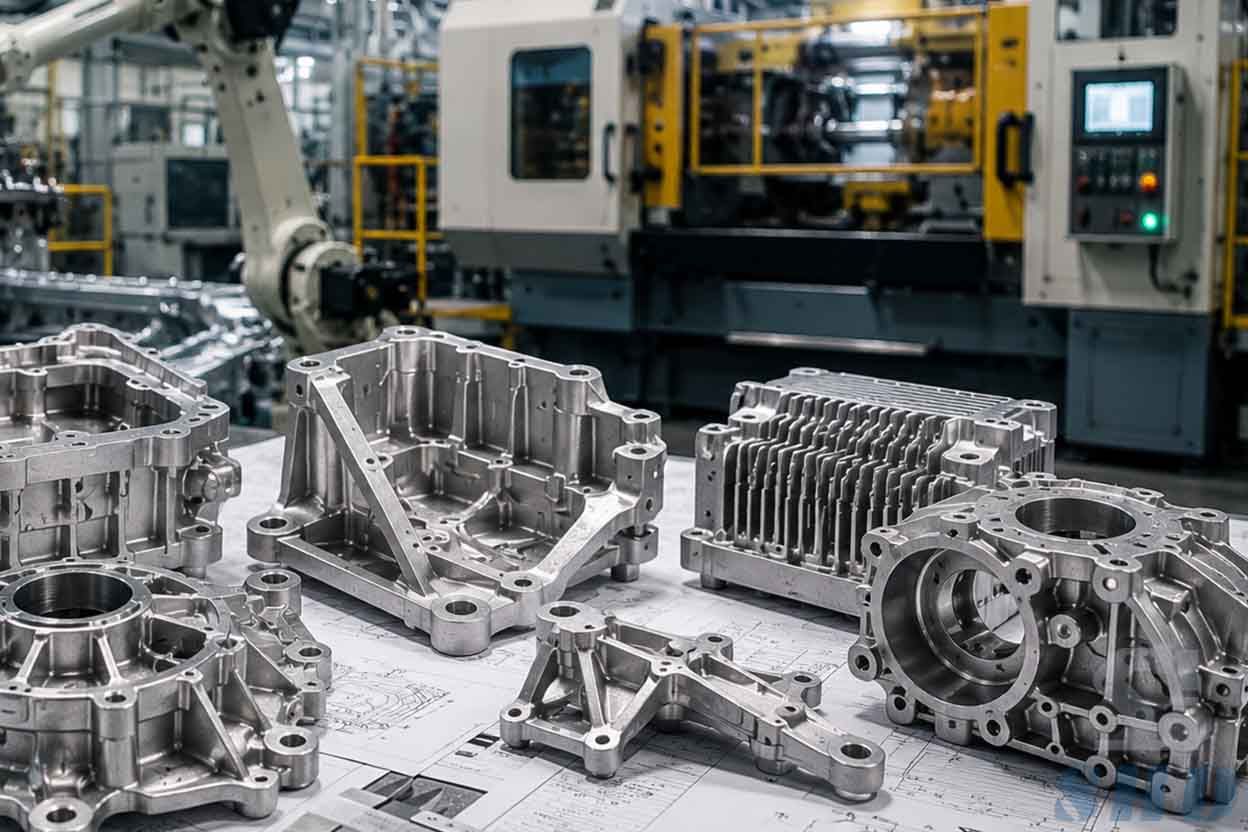
This is important for buyers to understand. The future of die casting is not only about bigger machines. It is also about smarter design, better tooling, improved process control, and more integrated OEM die casting manufacturing.
Automation and Process Control Are Becoming Essential
Another major part of die casting industry trends 2026 is automation. Modern die casting production increasingly depends on robotic spraying, automatic extraction, real-time temperature monitoring, pressure control, trimming automation, and digital inspection systems. These improvements help reduce variation and improve repeatability across batches.
For OEM customers, this means supplier selection should not focus only on unit price. A reliable supplier must understand tooling stability, molten metal flow, cycle control, defect prevention, machining allowance, and surface finishing compatibility. At SHD Precision Die Casting, we believe process control is one of the most important differences between ordinary casting supply and professional OEM die casting manufacturing. A good sample is not enough. The real challenge is maintaining the same quality across continuous production.
Sustainability Is Moving From Marketing to Manufacturing Reality
Sustainability is also becoming more practical in die casting. In 2026, more manufacturers are paying attention to material utilization, scrap recycling, furnace efficiency, die life, and defect reduction. These areas are not only environmental concerns. They also affect production cost and long-term supply stability.
Aluminum die casting has an advantage because aluminum can be recycled efficiently when material streams are properly managed. However, recycled material must still meet the performance requirements of the final product.
For demanding OEM projects, material traceability and alloy consistency remain important. Using recycled content without proper control can lead to quality issues, especially in parts requiring strength, sealing, machining, or decorative finishing.
What OEM Buyers Should Focus on in 2026
For buyers planning new die casting projects, 2026 should be treated as a year of engineering-driven supplier selection. The most valuable suppliers will not only quote a drawing. They will review manufacturability, identify risk areas, recommend material options, evaluate finishing requirements, and support production planning before tooling begins.
Key questions include:
-Can the part be cast with stable wall thickness?
-Are the tolerances realistic for die casting?
-Which areas require secondary machining?
-Will surface finishing expose hidden casting defects?
-Is the design suitable for long-term production?
These questions help prevent expensive tooling revisions and quality disputes later.
Conclusion
Die casting industry trends 2026 point toward lighter materials, more integrated structures, stronger automation, and more practical sustainability. For OEM manufacturers, the opportunity is not only to reduce cost, but to build smarter, more efficient metal components through well-planned aluminum die casting and professional OEM die casting manufacturing.
Engineering Support for the Next Stage of Die Casting
At SHD Precision Die Casting, we support OEM customers by reviewing design feasibility, material selection, tooling strategy, casting quality, machining requirements, and surface finishing plans. As die casting industry trends 2026 continue to evolve, our focus remains on helping customers develop stable, scalable, and production-ready die-cast parts.