
Die-Casting Equipment Maintenance Supports Stable OEM Production


Die-casting equipment maintenance is one of the most important routines for keeping production stable, reducing sudden downtime, and protecting the long-term accuracy of casting machines.
In a die casting workshop, a machine may appear to run normally while small problems are already developing inside the hydraulic system, injection unit, lubrication system, cooling circuit, or mold structure. If these issues are ignored, they can lead to unstable filling, surface defects, pressure loss, mold wear, or unexpected machine failure.
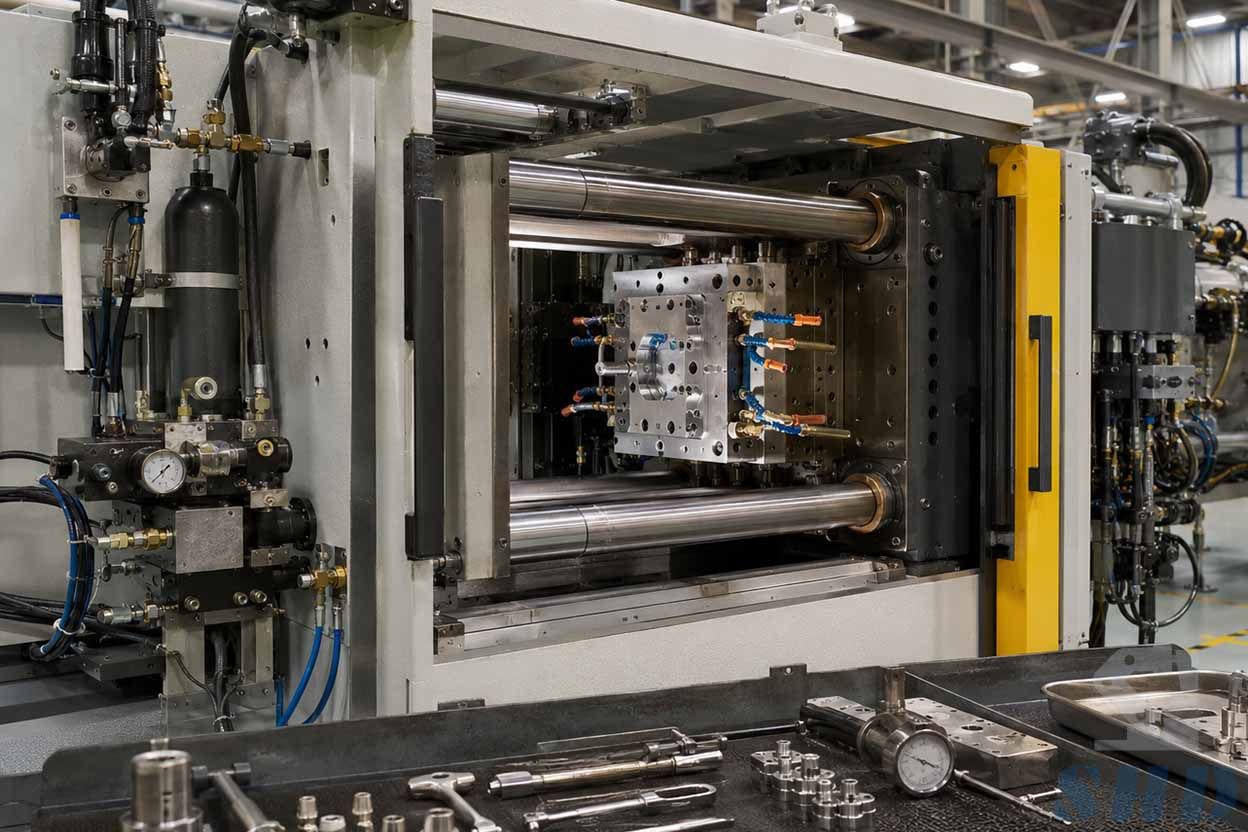
At SHD Precision Die Casting, we view equipment care as part of production quality control, not just a repair activity after problems occur.
Why Die-Casting Equipment Maintenance Should Begin With Daily Checks
A practical die-casting equipment maintenance plan should start with simple daily visual inspection. Operators should check whether there are oil leaks, abnormal sounds, unstable movements, damaged cables, loose bolts, or unusual temperature changes before production begins.
The hydraulic system deserves particular attention. Oil level, oil color, fluid temperature, hose condition, and pressure stability can all affect machine performance. Contaminated or overheated oil may reduce hydraulic response and increase wear on internal components.
Lubrication is another daily focus. Automatic lubrication systems should be checked to confirm that grease reaches toggle pins, guide rails, and moving joints. Poor lubrication may not cause immediate failure, but it can gradually increase friction, create abnormal wear, and reduce motion accuracy. This is where routine machine tool maintenance becomes directly connected with casting consistency.
Weekly Inspection Helps Identify Early Production Risks
Weekly maintenance should go beyond visual checking. Pressure testing, fluid condition review, injection movement inspection, and safety function testing should be included in the regular schedule.
The shot end is a key area in the die-casting inspection process. The plunger tip, shot sleeve, and related sealing areas should be checked for wear, scoring, material buildup, or poor fit. If the plunger tip is worn, molten metal may leak backward during injection, causing unstable pressure and inconsistent filling.
Cooling lines should also be monitored weekly. Water flow, temperature balance, and signs of mineral blockage can affect die temperature control. If cooling becomes uneven, casting defects such as shrinkage, sticking, distortion, or surface marks may become more frequent.
A good die-casting inspection process should record these changes before they become repeated defects.
Monthly Overhaul Protects Long-Term Machine Performance
Monthly and periodic maintenance should focus on deeper inspection and component reliability. Safety systems must be tested carefully, including emergency stop buttons, safety gates, electrical interlocks, and alarm systems. These checks protect both operators and equipment during high-pressure production.
Mold components also require scheduled attention. Parting lines should be cleaned, sliding areas should receive high-temperature grease, and mold surfaces should be inspected for heat checking, cracking, wear, or sticking marks.
Routine machine tool maintenance should also include guide components, clamping systems, tie bars, ejector mechanisms, sensors, and electrical connections. These areas may not always be visible during normal production, but they influence machine stability and casting accuracy.
Real Production Experience From the Workshop
In actual die casting work, many equipment problems appear gradually rather than suddenly. For example, a machine may produce acceptable first samples but begin showing flash or dimensional movement after continuous running. This may indicate that die temperature, clamping force, injection pressure, or cooling balance has changed during the cycle.
Another common situation is blocked venting or dirty mold parting lines. Operators may first notice small surface defects, but the root cause may be poor air discharge, residue buildup, or unstable mold closing.
This is why die-casting equipment maintenance should always be connected with production records. Machine condition, casting appearance, pressure data, cooling performance, and defect trends should be reviewed together.
Conclusion
Die-casting equipment maintenance helps prevent unexpected downtime, protect machine accuracy, and improve the stability of the die-casting inspection process. Daily checks, weekly testing, and monthly overhauls all work together to support safer, cleaner, and more repeatable production.
Supporting Stable Die Casting Production
At SHD Precision Die Casting, we treat die-casting equipment maintenance as part of our broader production control system. Through routine machine tool maintenance, mold care, hydraulic inspection, shot-end monitoring, and a practical die-casting inspection process, we support OEM customers with more stable and reliable die casting manufacturing.