
What Buyers Should Know About China Die Casting Manufacturing


China die casting manufacturing is widely used for custom metal components that require repeatable geometry, efficient production, and integrated secondary processing. However, selecting a manufacturer should involve more than comparing quotations or production speed. Part design, mold engineering, metal flow, dimensional requirements, machining needs, and quality control all influence whether a casting can perform consistently in production.
For international buyers, a useful sourcing process begins with a clear technical drawing and an understanding of which features are critical to assembly or function.
How China Die Casting Manufacturing Supports Custom Projects
Die casting uses reusable steel dies to form metal parts under pressure. The process can produce complex geometry with ribs, bosses, openings, and integrated mounting features, but good results depend heavily on how the component and die are designed.
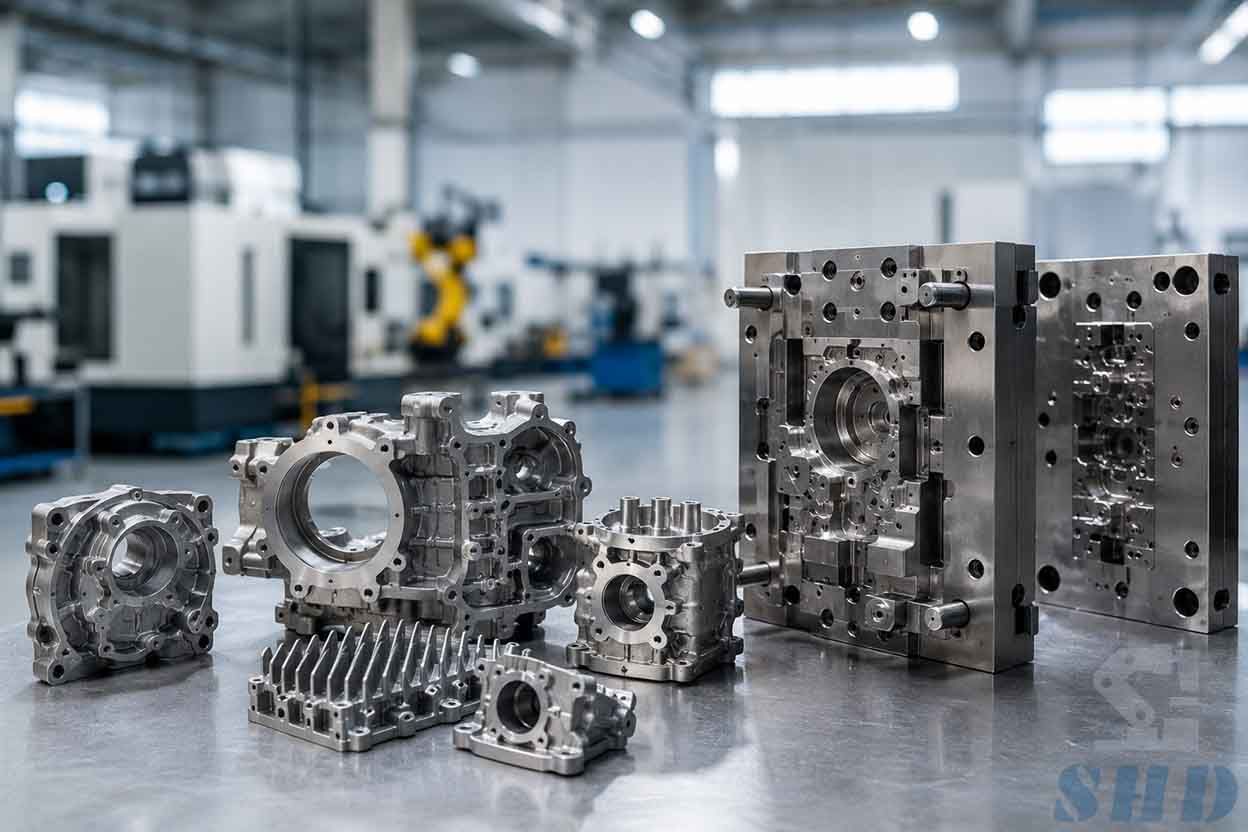
NADCA recommends relatively uniform wall thickness, suitable draft, and fillets or radii for die-cast part design. It also identifies metal flow, venting, cooling lines, and ejection as important considerations during die development. These factors matter because a part that looks simple in a CAD model may contain areas that are difficult to fill, cool, eject, or machine consistently.
Design Review Should Come Before Tooling
Early design review is one of the most valuable steps in a custom die casting project. Sudden wall thickness changes can create uneven filling and solidification. Deep ribs, narrow passages, isolated bosses, and sharp transitions may also affect mold design or production stability.
Critical surfaces should therefore be identified before tooling begins. These may include sealing faces, bearing locations, threaded areas, mounting datums, or dimensions that determine assembly.
Not every surface requires the same tolerance. Applying unnecessarily tight requirements across an entire component can increase tooling, machining, and inspection complexity without improving performance.
Mold Design Influences Casting Quality
A die is more than the negative shape of the finished component. Runners, gates, vents, cooling channels, ejector systems, cores, and slides may all influence how the casting is produced.
Metal must reach the cavity without trapping excessive air, while displaced air needs an effective path to escape. Thermal balance is also important because different areas of the die absorb and release heat at different rates. NADCA specifically treats gating, venting, cooling-line placement, porosity management, and process control as key areas of die-casting engineering.
This is why precision die casting depends on coordinated tooling and process planning rather than machine pressure alone.
Secondary Machining Should Be Planned Early
Many custom die casting parts require additional CNC machining after casting. Precision bores, sealing surfaces, threaded holes, mounting areas, or tight dimensional features may be more practical to machine than to form completely in the die.
Machining allowance, datum selection, fixture access, and clamping areas should therefore be considered during the casting design stage. If these details are addressed only after the mold is complete, additional tooling changes or inefficient machining setups may be required.
Surface finishing should also be included in the same planning process because coating, polishing, or other downstream operations can affect appearance and dimensional requirements.
Quality Control Should Follow Functional Requirements
Casting inspection should focus on what matters to the finished application. Some components may require close dimensional control, while others place greater importance on surface condition, internal quality, machining accuracy, or assembly consistency. NADCA's current die casting standards cover areas including tolerances, GD&T, tooling, process guidance, and quality assurance, illustrating how these factors are connected rather than independent. Buyers should therefore communicate critical dimensions, cosmetic areas, machining features, and functional expectations clearly before production.
Conclusion
China die casting manufacturing can support efficient production of complex metal components, but supplier selection should not be based on location or price alone.
Reliable results depend on part design, mold engineering, controlled metal flow, thermal management, machining strategy, and inspection. A manufacturer that reviews these factors before tooling can help reduce avoidable design changes and create a more practical path toward repeatable production.
Die Casting Project Support from SHD Precision Die Casting
SHD Precision Die Casting supports custom metal component projects based on customer drawings, three-dimensional models, functional features, machining requirements, and expected production needs.
By reviewing geometry, tooling considerations, critical surfaces, and secondary processing before production, SHD Precision Die Casting can help customers develop a manufacturing route that considers both casting efficiency and finished-part requirements.