
Aluminum Alloy Anodizing for Die Cast Components


Aluminum alloy anodizing is an electrochemical surface treatment that creates a controlled oxide layer on aluminum. It can improve corrosion resistance, surface hardness, wear behavior, and appearance, depending on the alloy and anodizing process.
For die-cast components, however, anodizing is not always as straightforward as it is for wrought aluminum. Alloy composition, silicon content, casting porosity, surface condition, and machining can all influence the final finish. Buyers considering anodized die cast aluminum should therefore evaluate the casting material and appearance requirements before specifying the treatment.
What Affects Aluminum Alloy Anodizing on Die Cast Parts?
The aluminum alloy itself has a major influence on the anodized result. Die-casting alloys often contain silicon, copper, zinc, or other elements that improve casting behavior or mechanical performance. These alloying elements do not react during anodizing in exactly the same way as aluminum.
As a result, a die-cast component may develop a darker, grayer, or less uniform appearance than a wrought aluminum part. High-silicon alloys can be especially difficult when a project requires a bright, decorative, or highly consistent color finish.
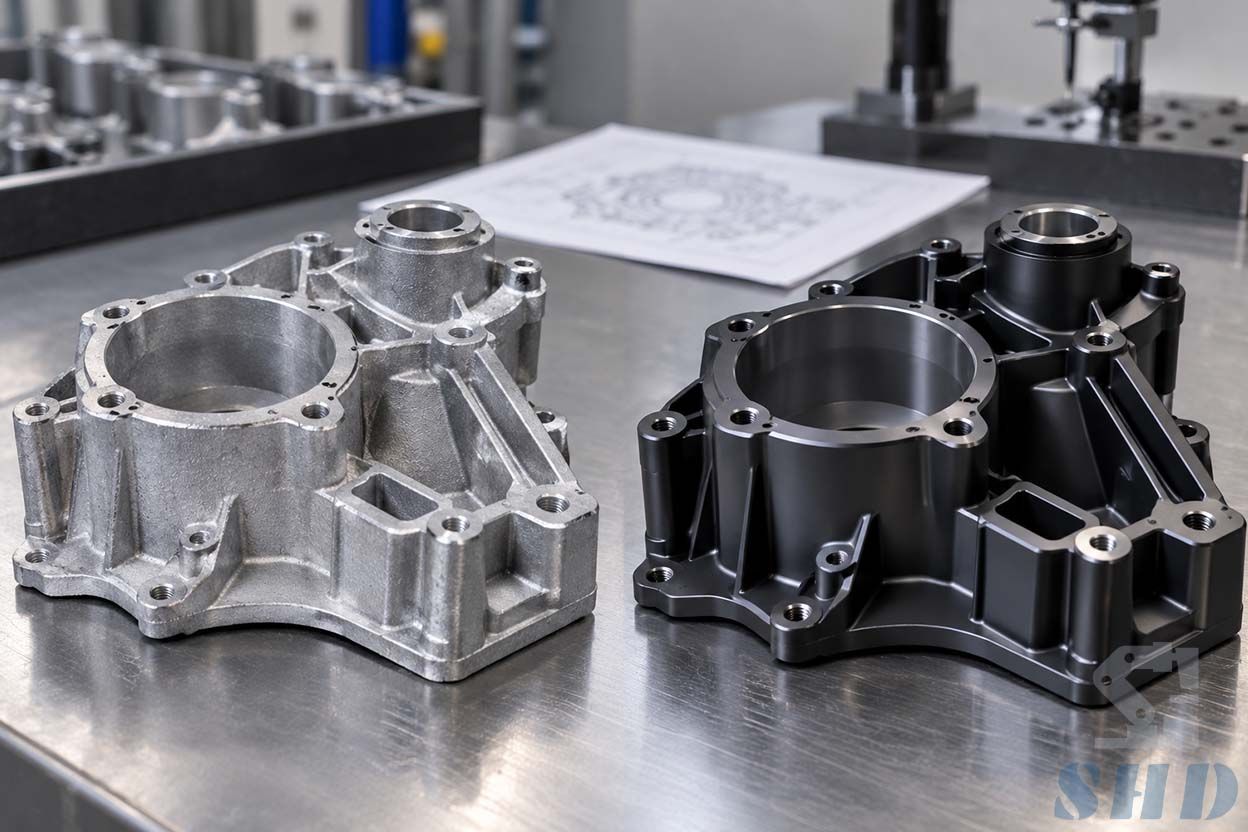
This does not mean die-cast aluminum cannot be anodized. It means the expected result should match the selected alloy and the purpose of the finish.
Porosity Can Influence Surface Appearance
Porosity is another consideration in aluminum die casting surface treatment. Small pores near the casting surface may become more visible after machining, polishing, chemical cleaning, or anodizing. If a machined face cuts into subsurface porosity, the treated surface may show spots or local variation.
For this reason, cosmetic areas should be identified during the design stage. Gate position, overflow design, metal flow, machining allowance, and surface finishing strategy may all affect the final appearance. A visually critical anodized surface should not be treated as an afterthought after the casting tool has already been developed.
Machined and As-Cast Areas May Look Different
A single die-cast part may contain both as-cast and CNC-machined surfaces. These areas can respond differently to anodizing because machining removes the original casting skin and exposes new material underneath. Tool marks and local surface roughness can also remain visible after treatment.
If appearance consistency is important, surface preparation may require additional polishing, blasting, or other finishing before anodizing. The exact process should be confirmed according to the alloy and the desired visual result.
Functional and Decorative Anodizing Have Different Goals
Not every anodizing project is primarily cosmetic. Some parts use anodizing mainly to improve surface protection or wear resistance, while others require a specific decorative appearance.
This distinction should be made early. A functional component may accept some color variation, while a visible enclosure or consumer-facing metal part may require tighter control of color and surface texture. Buyers should therefore clarify:
-Required alloy
-Functional or decorative purpose
-Critical cosmetic areas
-Machined surfaces
-Color expectations
-Surface texture requirements
-Assembly and dimensional requirements after finishing
Conclusion
Aluminum alloy anodizing can provide useful surface properties for die-cast components, but the final result depends strongly on alloy composition, casting quality, porosity, machining, and surface preparation.
For die-cast aluminum, good finishing results begin before anodizing itself. Material selection, casting design, machining strategy, and appearance requirements should be reviewed together so that the selected surface treatment is realistic for the component.
Die Casting and Surface Planning with SHD Precision Die Casting
SHD Precision Die Casting supports custom die-cast component projects based on part drawings, alloy requirements, machining areas, surface expectations, and downstream finishing needs.
When anodizing is being considered, early review of the casting geometry, cosmetic surfaces, machining allowance, and finishing requirements can help identify potential appearance or processing risks before production begins.
Frequently Asked Questions
Q1: Can every die-cast aluminum alloy be anodized?
Many aluminum alloys can form an anodic oxide layer, but the appearance and performance may vary significantly with alloy composition. High levels of silicon, copper, or other alloying elements can affect color and surface uniformity.
Q2: Why can anodized die-cast parts look darker than machined aluminum parts?
Die-casting alloys often contain more silicon and other alloying elements than common wrought aluminum grades. These elements can influence the surface after anodizing and produce darker or less uniform tones.
Q3: Should anodizing be specified before the die-casting mold is developed?
Ideally, yes. If the part has important cosmetic surfaces or machined areas, the finishing requirement can influence alloy selection, casting design, machining allowance, and surface preparation planning.